

Physiotherapy for Knee Osteoarthritis
Knee osteoarthritis is a common cause of pain, stiffness, and reduced mobility — particularly in adults over 40. While it’s often described as “wear and tear,” symptoms are not inevitable, and many people can improve pain and function significantly with the right physiotherapy approach.
At The Physio Crew, we help people with knee osteoarthritis move with confidence again through evidence-based assessment, education, and progressive rehabilitation.

What Is Knee Osteoarthritis?
Knee osteoarthritis (OA) is a condition where the joint structures — including cartilage, bone, and surrounding tissues — undergo gradual change. These changes can lead to pain, stiffness, swelling, and reduced movement.
Common symptoms include:
-
Pain during or after activity
-
Stiffness, especially after sitting or first thing in the morning
-
Pain going up or down stairs
-
Swelling or a feeling of tightness
-
Reduced confidence loading the knee
Importantly, pain severity does not always match X-ray findings.

What Is Knee Osteoarthritis?
Common Causes & Contributing Factors
Knee osteoarthritis develops over time and is influenced by multiple factors, including:
-
Reduced muscle strength around the knee and hip
-
Previous knee injury or surgery
-
Sudden changes in activity levels
-
Excessive joint loading without adequate conditioning
-
Reduced movement variety or long periods of inactivity
-
Age-related changes in tissue capacity
Understanding which factors are relevant to you helps guide effective treatment.

How Physiotherapy Helps Knee Osteoarthritis
Physiotherapy focuses on improving joint capacity, not avoiding movement.
Comprehensive Assessment
Your physiotherapist will assess:
-
Knee range of movement
-
Strength of the quadriceps, hamstrings, and hips
-
Movement patterns such as squatting, stairs, and walking
-
Balance and joint control
-
Activity levels and daily demands
This allows treatment to be targeted and realistic.
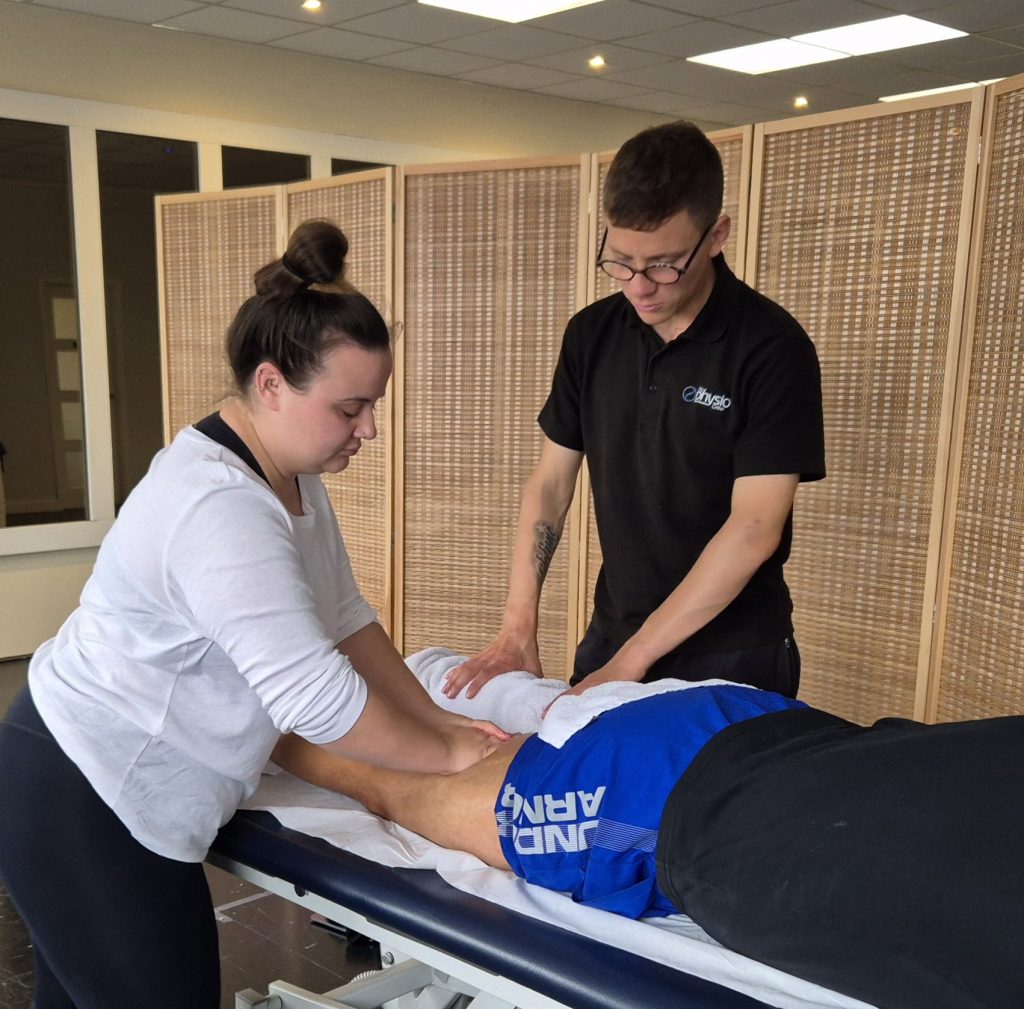
Individualised Rehabilitation Programme
Treatment often includes:
-
Progressive strengthening exercises for the knee and hip
-
Functional exercises tailored to daily activities
-
Movement retraining to improve confidence and control
-
Strategies to manage flare-ups
-
Education around joint health and loading
Exercise is one of the most effective treatments for knee OA.
Load Management & Activity Guidance
Rather than avoiding activity, physiotherapy helps you:
-
Stay active safely
-
Reduce pain during daily tasks
-
Build tolerance to walking, stairs, and exercise
-
Maintain independence and confidence

Manual Therapy & Supportive Treatments
Where appropriate, treatment may include:
-
Joint mobilisation
-
Soft tissue techniques
-
Advice on pacing and recovery
-
Guidance on footwear or supportive strategies
These complement rehabilitation rather than replace it.
How Long Does Knee Osteoarthritis Take to Improve?
Many people notice improvements within 6–12 weeks of consistent physiotherapy. Progress depends on symptoms, activity levels, and adherence to rehabilitation.
While osteoarthritis is a long-term condition, symptoms can be well managed, and quality of life significantly improved.

When Should You See a Physiotherapist?
You should consider an assessment if:
-
Knee pain is limiting walking or stairs
-
Symptoms are worsening over time
-
You feel unsure about exercising safely
-
You want to avoid or delay surgery
Early intervention often leads to better long-term outcomes.
Knee Osteoarthritis Treatment at The Physio Crew
Our physiotherapists combine:
-
Evidence-based knee OA management
-
Clear education and reassurance
-
Personalised rehabilitation programmes
-
A focus on long-term joint health
We help you stay active, strong, and confident in your movement.

Book Physiotherapy for Knee Osteoarthritis
If knee osteoarthritis is affecting your daily life, we’re here to help.
👉 Book your physiotherapy assessment today or if you still have questions simply book a free call so we can help you map out a plan for your recovery.
Or contact our team to discuss your symptoms and options.
1. What is knee osteoarthritis?
Knee osteoarthritis is a condition where changes occur in the knee joint, including cartilage, bone, and surrounding tissues. These changes can lead to pain, stiffness, and reduced movement, but symptoms vary widely between individuals.
1. What is knee osteoarthritis?
View Answer2. Is knee osteoarthritis just “wear and tear”?
No. While age can play a role, knee osteoarthritis is influenced by strength, movement habits, previous injury, activity levels, and overall joint capacity. Many people improve symptoms significantly with the right treatment.
2. Is knee osteoarthritis just “wear and tear”?
View Answer3. Can physiotherapy help knee osteoarthritis?
Yes. Physiotherapy is one of the most effective treatments for knee osteoarthritis. It focuses on improving strength, movement, and confidence with activity, which can reduce pain and improve function.
3. Can physiotherapy help knee osteoarthritis?
View Answer4. Should I stop exercising if I have knee osteoarthritis?
No. In most cases, stopping activity can make symptoms worse. The key is choosing the right exercises and progressing them safely. A physiotherapist can guide you on how to stay active without aggravating symptoms.
4. Should I stop exercising if I have knee osteoarthritis?
View Answer5. Why does my knee hurt more going up or down stairs?
Stairs place higher load through the knee joint. If strength or control is reduced, this extra load can increase pain. Physiotherapy helps improve strength and movement strategies to make stairs more comfortable.
5. Why does my knee hurt more going up or down stairs?
View Answer6. Does knee osteoarthritis always show on X-ray?
Not always. Some people have clear X-ray changes with little pain, while others have significant pain with minimal imaging changes. Symptoms and function are often more important than scan findings.
6. Does knee osteoarthritis always show on X-ray?
View Answer7. Can knee osteoarthritis improve without surgery?
Yes. Many people manage knee osteoarthritis successfully with physiotherapy, exercise, and lifestyle adjustments, often avoiding or delaying the need for surgery.
7. Can knee osteoarthritis improve without surgery?
View Answer8. How long does physiotherapy take to help knee osteoarthritis?
Many people notice improvements within 6–12 weeks, depending on symptom severity, activity levels, and consistency with rehabilitation. Longer-standing symptoms may take more time.
8. How long does physiotherapy take to help knee osteoarthritis?
View Answer9. Is strengthening safe for arthritic knees?
Yes. Strengthening exercises are safe and strongly recommended for knee osteoarthritis when guided appropriately. Stronger muscles help reduce joint strain and improve confidence with movement.
9. Is strengthening safe for arthritic knees?
View Answer10. Can knee osteoarthritis flare up from time to time?
Yes. Flare-ups are common and don’t mean damage is worsening. A physiotherapist can help you understand triggers and manage flare-ups effectively without stopping activity altogether.